
Why Paraphrasing Is a Must-Teach Skill for Intermediate Learners
One of the first tasks I give my intermediate English learners is paraphrasing—and for good reason.
Here’s why it’s so powerful:
Reveals vocabulary range—Can they find the right synonyms, or do they rely on the same words?
Shows sentence flexibility – Can they restructure ideas while keeping the same meaning?
Uncovers reasoning skills—Why did they choose this word instead of that one?
Tests comprehension—If they can’t paraphrase it, do they truly understand it?
What Exactly Is Paraphrasing?
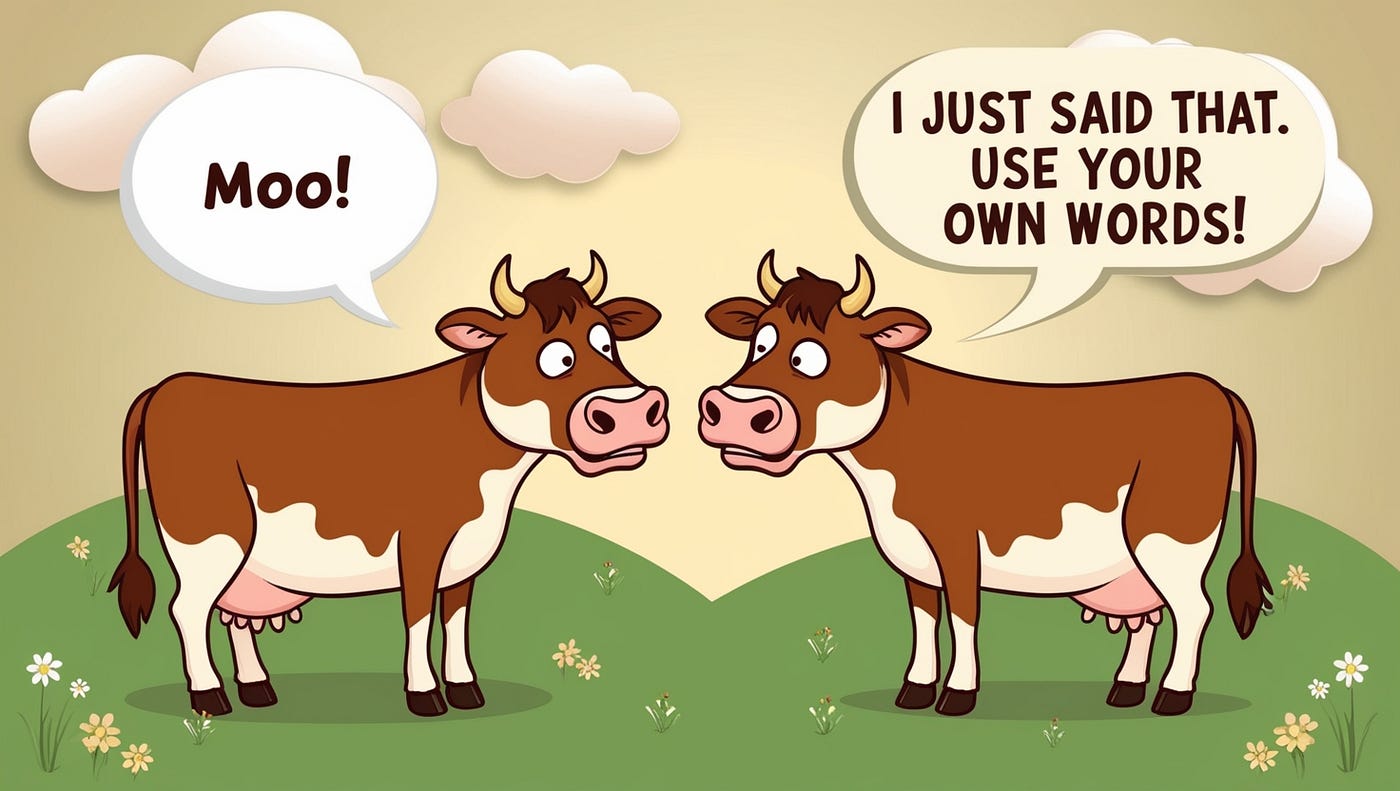
It’s rewriting an idea in your own words without changing its meaning—like a linguistic remix. Check out my in-depth guide for business email writing
Think of it like describing the number 5 without saying it directly:
- "Half of ten"
- "The fingers on one hand"
- "What comes after four but before six?"
In English, paraphrasing isn’t as precise as math, but the goal is the same: Stay true to the original while making it your own.
For official examples of paraphrasing and rewording, see Cambridge Dictionary’s explanation
How to Master Paraphrasing (For Professionals & Learners)
Step 1: Understand the Original Text
- Read carefully—highlight the core idea.
- Ask: What’s the key message? What can be reworded?
Step 2: Break It Down
- Split long sentences into smaller chunks.
- Simplify complex terms (but keep technical words intact).
Step 3: Use Synonyms Wisely
- Swap words like "important" → "crucial" or "essential."
- But avoid:
- Overusing a thesaurus (e.g., changing "fast" to "expeditious" in casual speech).
- Replacing proper nouns (e.g., "Shakespeare" ≠ "that famous English playwright").
Step 4: Change the Structure
- Switch from active → passive voice:
- "The company launched the product." → "The product was launched by the company."
- Rearrange clauses:
- "Because it rained, the game was canceled." → "The game was canceled due to rain."
Step 5: Make It Your Own
- Explain it as if teaching a colleague.
- Adjust for audience: Simplify for beginners, elaborate for experts.
Step 6: Verify the Meaning
- Compare it with the original—did you accidentally distort it?
- Avoid copying full phrases (unless quoting).
Step 7: Review & Refine
- Proofread for grammar/spelling.
- Read aloud—does it sound natural?
The Bigger Takeaway
Paraphrasing isn’t just about swapping words—it’s about reshaping ideas while keeping their essence. It’s a bridge between memorization and true fluency.
For writing-focused paraphrasing examples check this Grammarly article
For Teachers:
- Try "Back Translation" (translate a paraphrase back to the original to spot meaning shifts).
- Use news headlines—great for concise rewording practice!
For Professionals:
Practice summarizing emails, reports, or meeting notes in your own words.